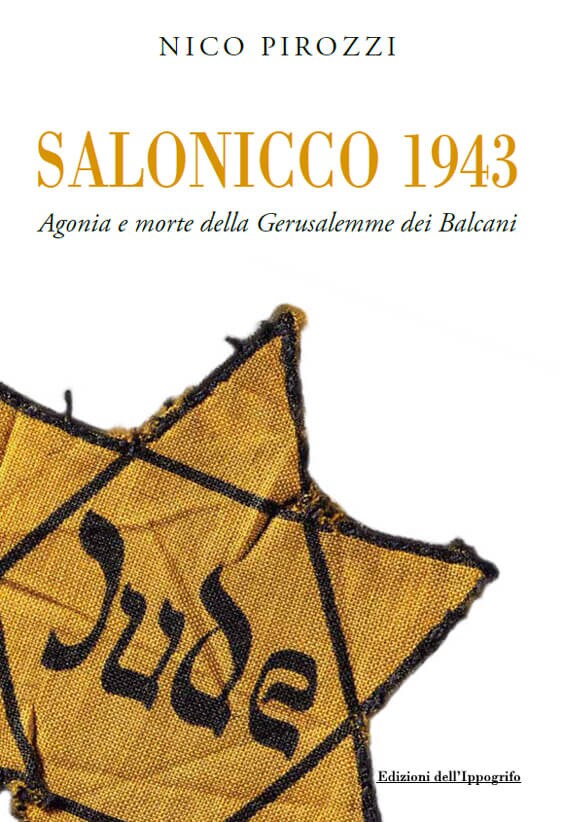
Salonicco 1943. Agonia e morte della Gerusalemme dei Balcani
Thessaloniki 1943. Agony and Death of the Jerusalem of the Balkans
- Author
- Nico Pirozzi
- Publisher
- Edizioni dell’Ippogrifo
- ISBN
- 9-788831-995078
- First edition
- January 2019
- Pages
- 232
- Price (€)
- 16.00
One hundred and fifty-seven days. This was the span of time the Nazis took to declare Thessaloniki Judenfrei, a city cleansed of the Jewish germ. To manage the programme of ghettoisation and deportation of its more than fifty thousand residents of Jewish origin, in February 1943 Eichmann had sent SS captains Alois Brunner and Dieter Wislincey: two specialists of the Final Solution who had already operated successfully in the territories of eastern Europe. Precisely in that tail end of winter, at Villa Olgas, a small jewel of eclectic architecture and seat of the Italian diplomatic mission in Thessaloniki, consul Guelfo Zamboni began working on a plan aimed at securing the safety of the roughly 300 Jews of Italian origin and of the Greek Jews who worked for Italian firms. A project that was apparently simple, but also extremely compromising from an institutional point of view, which provided for granting the status of Italian citizens to as many Jews as possible, fellow nationals or not. Zamboni’s initiative (which would be shared and continued by Giuseppe Castruccio, who succeeded him in the post in June of the same year) would be supported by a small group of fellow Italians, including the agents of the Military Intelligence Service (SIM), Riccardo Rosenberg and Emilio Neri, and the Royal Italian Army captain Lucillo Merci. The latter, a forty-year-old primary school headmaster from Bolzano whom the war had catapulted into Greece, is the author of a manuscript of extraordinary historical interest, which opens up new perspectives on what, after more than four centuries of existence, was the final chapter of the Jerusalem of the Balkans